BRANSON, Mo. — The Ozarks are widely known for live music, entertainment and outdoor recreation, but a quieter creative community has been steadily building across southwest Missouri and north-central Arkansas.
From Branson and Branson West to Harrison and Springfield, local artists are finding more places to exhibit their work, meet fellow creators and connect with the public. The result is an art scene that may not always command the same attention as the region’s theaters and attractions, but increasingly has an identity of its own.
That growth is especially visible in Branson.
The newly launched Branson Art Trail began in Historic Downtown Branson during Fall Fest in September. The developing trail is designed to connect residents and visitors with murals, sculpture, mosaics and other creative installations while also telling the stories behind the artwork. Organizers say the trail will expand beyond its initial downtown locations over time. Explore Branson
The project reflects a larger shift in how the community views the arts. Branson has long been recognized for performance, but organizations such as the Southern Missouri Arts Connection, or SMAC, have worked to give visual artists a stronger presence as well.
Founded in 2014, SMAC now provides exhibitions, classes, workshops and networking opportunities for artists throughout southern Missouri. The organization reports more than 80 members, with much of its membership coming from the Branson and Hollister area. SMAC
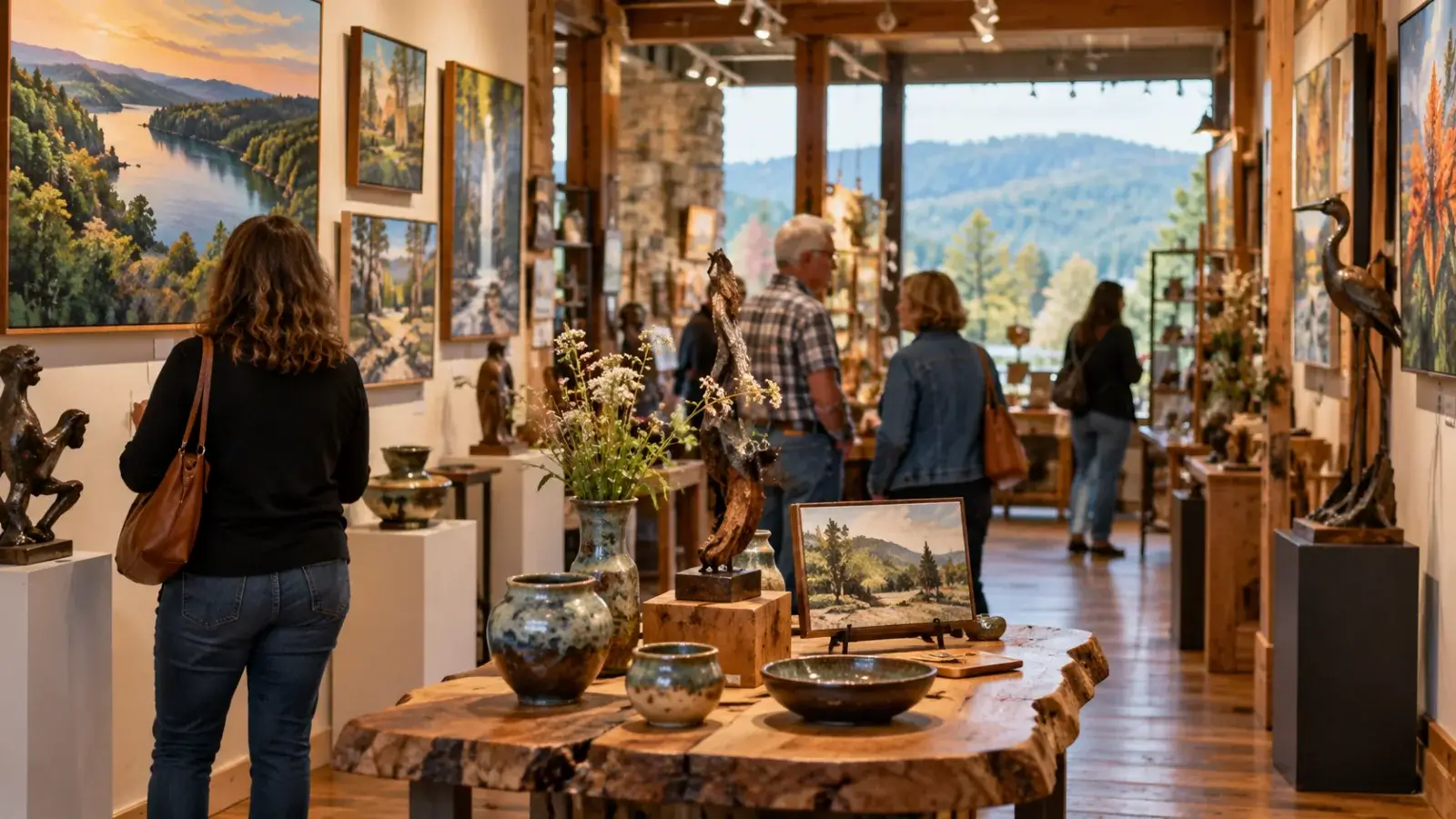
Just west of Branson, the Table Rock Art Guild represents another important piece of the regional art community. One of southwest Missouri’s longest-running arts organizations, the guild includes more than 60 artisan and professional members. Its Branson West gallery features paintings, photography, ceramics, jewelry, woodwork and other pieces created entirely by Ozarks artists. Visit Table Rock Lake
Across the state line, Harrison has developed its own creative network.
The Harrison Art League welcomes painters, photographers, sculptors and artists working in other media. The league sponsors several exhibitions each year, including opportunities for young artists, and regularly brings members together for educational programs and informal creative gatherings. The Historic Lyric Theater
Harrison’s historic Lyric Theater also serves as a regional cultural anchor. Operated by the Ozark Arts Council, the 1929 theater hosts community theater, concerts, educational programs and visual-art events. An upcoming Harrison Art League fall exhibition begins October 1, while productions and concerts continue throughout the season. The Historic Lyric Theater
Farther north, Springfield’s arts community provides another layer of support for creators throughout the Ozarks. The Springfield Regional Arts Council recently unveiled a 10-year cultural plan intended to expand participation in the arts and strengthen connections among artists, organizations and communities. The council also helped award $220,000 in arts and culture grants to 23 nonprofit organizations in 2026. Community Foundation of the Ozarks
What makes the Ozarks art scene distinctive, however, may be less about institutions and more about the artists themselves.
Much of the work created here remains closely connected to place. Landscapes, wildlife, waterways, rural life and Ozarks traditions frequently appear alongside contemporary painting, photography, ceramics, mixed media and increasingly experimental work.
That combination creates an art community that is both traditional and evolving.
And much of it exists outside large museums or commercial gallery districts.
Artwork hangs in libraries, community galleries and local businesses. Artists meet in guilds and small workshops. Exhibitions may take place in historic buildings rather than formal museums, and many artists continue creating their work while maintaining other careers.
For those artists, visibility can be one of the biggest challenges.
But as communities establish new art trails, exhibitions, classes and gathering places, the work being created across the Ozarks is becoming a little harder to overlook.
The region may always be known first for its lakes, mountains and entertainment.
Increasingly, though, it is also becoming a place where artists are finding room to be seen.