NASA is preparing one of its most ambitious new space observatories for launch later this month.
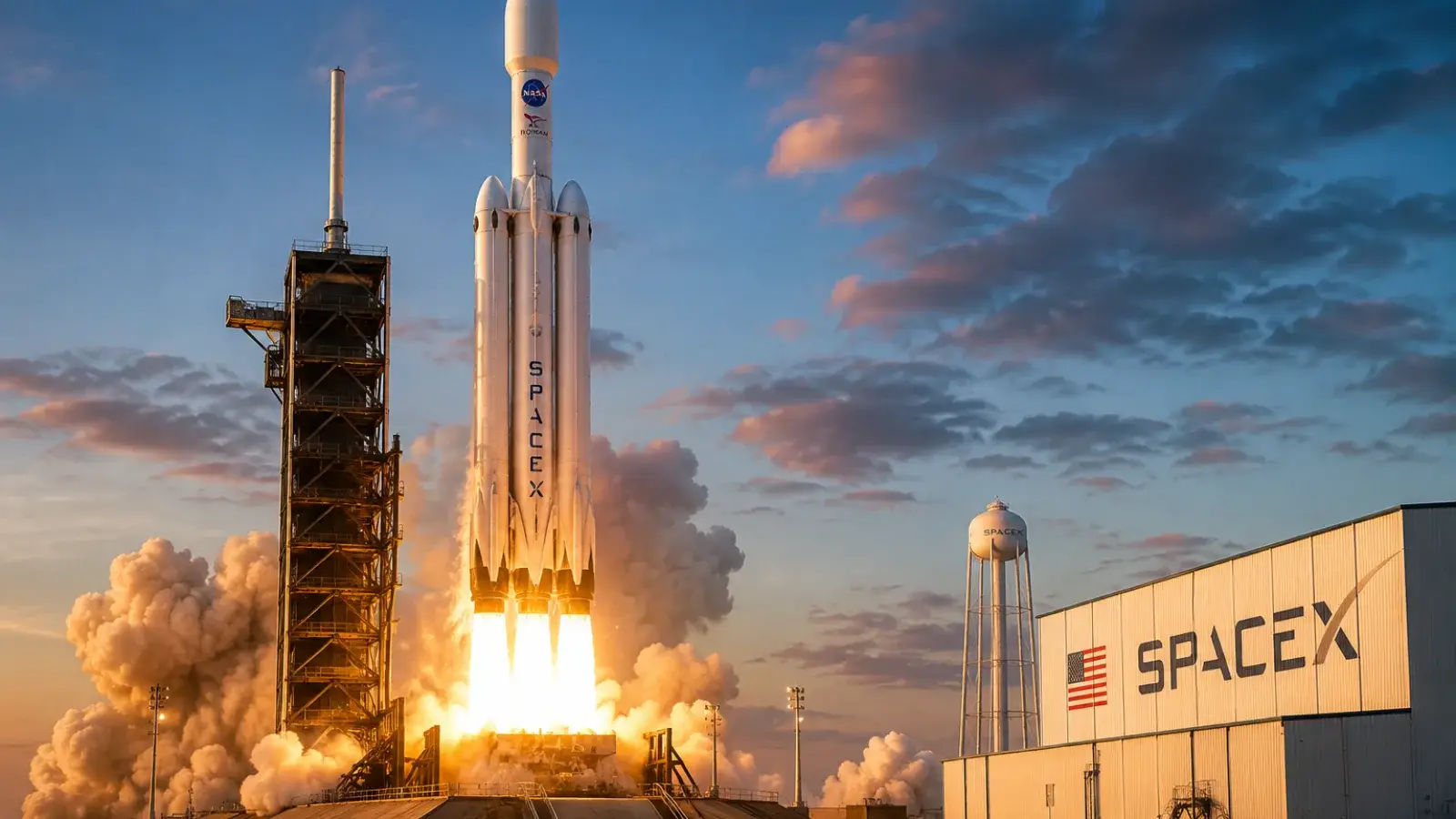
The Nancy Grace Roman Space Telescope is targeting liftoff no earlier than Aug. 30, 2026, aboard a SpaceX Falcon Heavy rocket from Launch Complex 39A at Kennedy Space Center in Florida.
Technicians recently completed fueling operations at Kennedy, loading about 290 gallons of hydrazine propellant into the spacecraft. That fuel will help Roman maneuver after launch and maintain its planned position near the Sun-Earth Lagrange point known as L2, about one million miles from Earth.
Once in place, Roman will begin a mission designed to give astronomers a much wider view of the universe than is possible with many existing space telescopes. NASA says Roman’s field of view will be at least 100 times larger than the Hubble Space Telescope’s while still providing highly detailed observations.
Scientists plan to use Roman to investigate some of astronomy’s biggest questions, including the nature of dark energy and dark matter. The observatory will also search for planets beyond our solar system and study galaxies, stars and other objects across enormous areas of the sky.
Roman is equipped with a Wide Field Instrument that will allow researchers to survey large portions of the universe rapidly. It also carries a coronagraph technology demonstration designed to block the glare from nearby stars, making it easier to study planets and planet-forming disks around them.
NASA expects Roman’s primary mission to last about five years, with enough onboard fuel potentially available to support an extended mission lasting several years longer.
The telescope is named for Nancy Grace Roman, NASA’s first chief astronomer, who played a major role in establishing space-based astronomy programs and is often associated with the early development of the Hubble Space Telescope.
With fueling complete, technicians are moving through the final stages of launch preparation, including attaching the observatory to hardware that will secure it to the rocket and placing it inside the Falcon Heavy’s protective payload fairing.
If the current schedule holds, Roman will lift off from Kennedy Space Center on Aug. 30 and begin its journey toward L2, where scientists hope it will provide an unprecedented panoramic look at the universe.