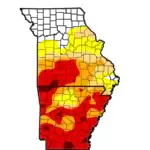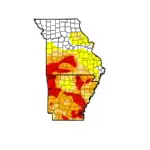
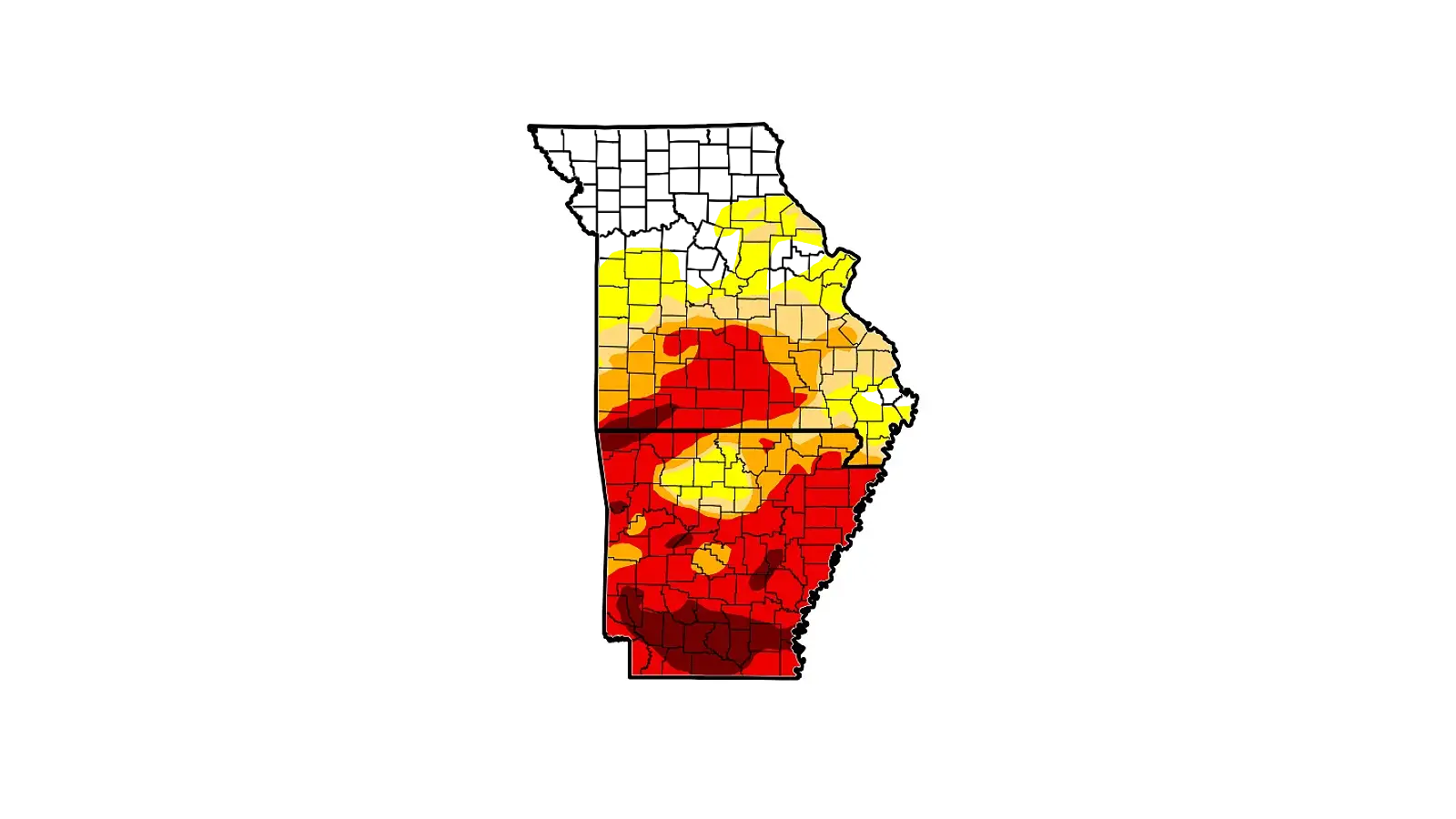
Drought conditions remain a significant concern across southern Missouri and northern Arkansas, according to the latest U.S. Drought Monitor released Thursday, October 22, with data valid through October 20.
In Southern Missouri, recent rainfall provided only limited relief, and drought has actually intensified in portions of Missouri. About 66% of Missouri remains drier than normal, while Extreme Drought (D3) now covers more than 16% of the state and Exceptional Drought (D4) affects roughly 1.4%.
For the Lakes Region, most of the Region is at a D3 or Extreme Drought Level while portions of Central Stone County and most of Barry County are at D4 or Exceptional Drought Level.
In northern Arkansas, conditions are similar around Harrison and Eureka Springs as most of Boone and Carroll County are also at Extreme Level while areas around the Buffalo National River are better at Abnormally Dry.
Stream flows, soil moisture, and vegetation health continue to run well below normal.
Elevated wildfire danger remains a concern due to dry fuels and ongoing precipitation deficits.
Overall in Arkansas, the state recorded its 8th driest September on record and is experiencing its 4th driest January-through-September period since 1895.
Approximately 2.8 million Arkansans live in drought-affected areas, with many counties in northern Arkansas experiencing moderate to severe drought conditions.
The latest national drought assessment notes that drought deterioration continues from the Lower Mississippi Valley into southern Missouri and Arkansas, driven by long-term rainfall deficits and unusually warm temperatures.
While occasional rainfall is possible during the coming week, substantial and sustained precipitation will be needed to make meaningful improvements across the Ozarks. Long-term moisture shortages remain firmly entrenched heading into late fall.