
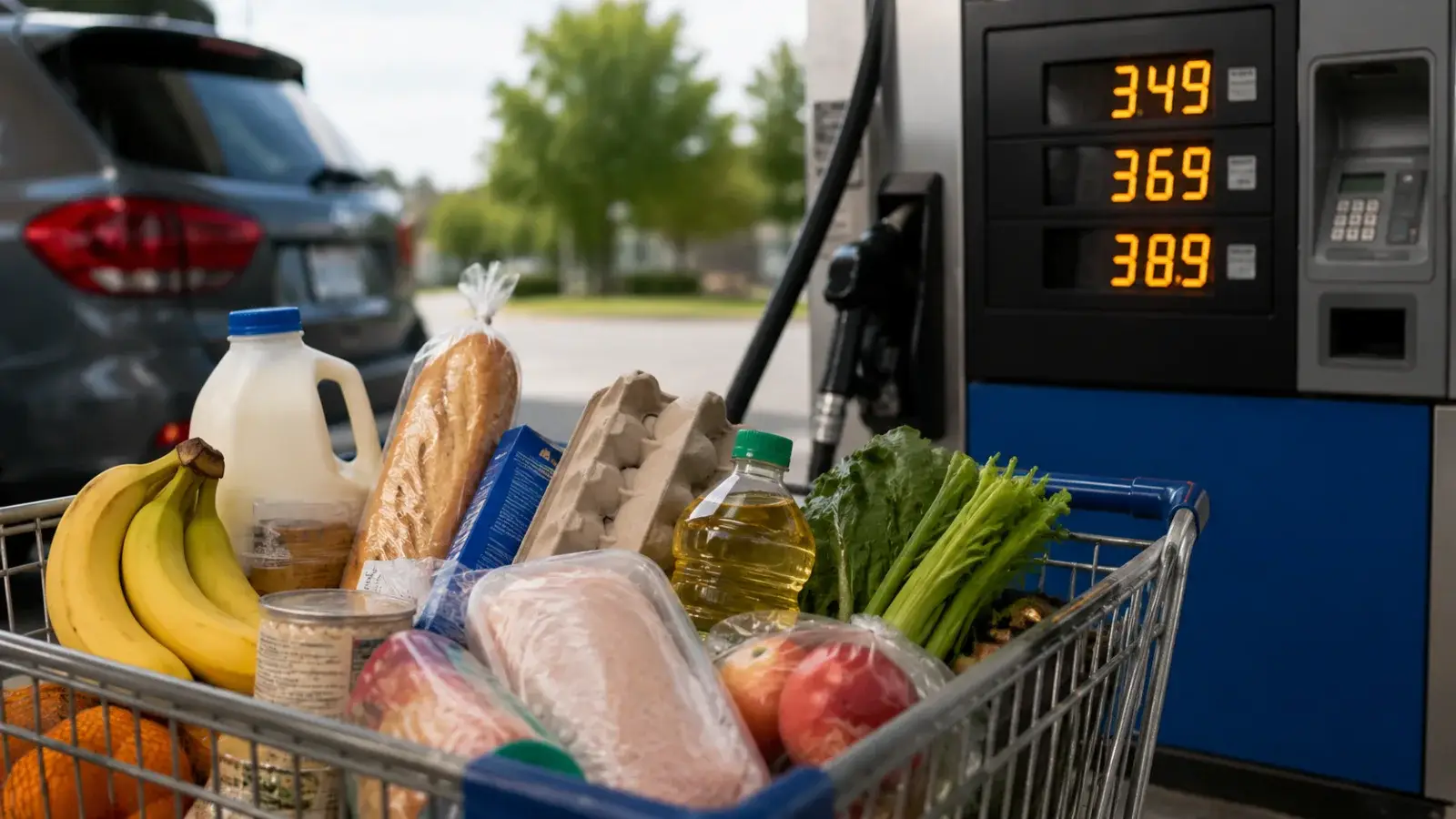
Consumer prices edged higher in July, but the overall pace of inflation eased slightly as lower gasoline costs helped offset increases in housing, food and several services.
The Consumer Price Index rose 0.1% in July on a seasonally adjusted basis after falling 0.4% in June, according to the U.S. Bureau of Labor Statistics. Over the past 12 months, consumer prices increased 3.4%, down from a 3.5% annual increase in June.
Shelter costs increased 0.1% during July and accounted for roughly two-thirds of the overall monthly increase. Food prices also rose 0.1%, while the cost of eating away from home increased 0.3%. Grocery prices, however, slipped 0.1% for the month.
Energy prices moved lower. The overall energy index fell 1.5% in July, while gasoline prices declined 2.9% from June. Despite that monthly decrease, gasoline prices remained 24.6% higher than they were a year earlier.
Prices excluding food and energy, often referred to as core inflation, rose 0.2% in July after remaining unchanged in June. Core prices were 2.5% higher than a year earlier.
Several categories became more expensive during the month. Medical care rose 0.4%, airline fares increased 2.2%, communication costs climbed 0.6%, and education costs rose 0.5%. Used cars and trucks increased 0.4%, while new vehicle prices rose 0.1%.
Consumers saw some relief in other areas. Prescription drug prices fell 0.8%, motor vehicle insurance declined 0.3%, and lodging away from home dropped 2.8%.
The July report provides the latest look at inflation pressures facing U.S. households as consumers continue to deal with higher prices for many everyday goods and services compared with a year ago.
The Bureau of Labor Statistics is scheduled to release the August Consumer Price Index report on Sept. 11.